


One day, on a whim, I decided to visit a Human Excellence Center, a place dedicated to fostering personal and personality development through various sessions. That day’s topic was “The Thought Process in Humans: Navigating Negative, Positive, and Overthinking.”
I had modest expectations for what seemed like a straightforward, hour-long session. Around twenty people were in attendance. The speaker, a well-mannered and soft-spoken individual in his late thirties, commanded the stage with quiet confidence. A single whiteboard stood prominently, ready to anchor the discussion.
THE SESSION BEGINS…

The speaker opened the session with a simple yet probing question: “What are you feeling right now?” To ensure clarity, he reiterated, “At this very moment, what emotions are you experiencing?” The audience, a diverse group of about twenty, responded eagerly. One person declared, “Happy,” another chimed in with “excited.” Others shared a range of sentiments—tension, anxiety, a touch of fear, confusion, even hunger.
I offered, “Eager.” With care, the speaker jotted each response on the whiteboard that stood prominently on the stage.He then drew a single line across the board, transforming it into an integer line: positive numbers on one side, negative on the other.
He plotted our expressed feelings along this axis, categorizing them as positive or negative. “Fear,” he explained, “can be positive when it drives an athlete to train relentlessly for a crucial tournament, fueled by the fear of failure.” Yet, he noted, fear turns negative when it paralyzes someone, causing them to avoid public speaking despite its importance to their career.
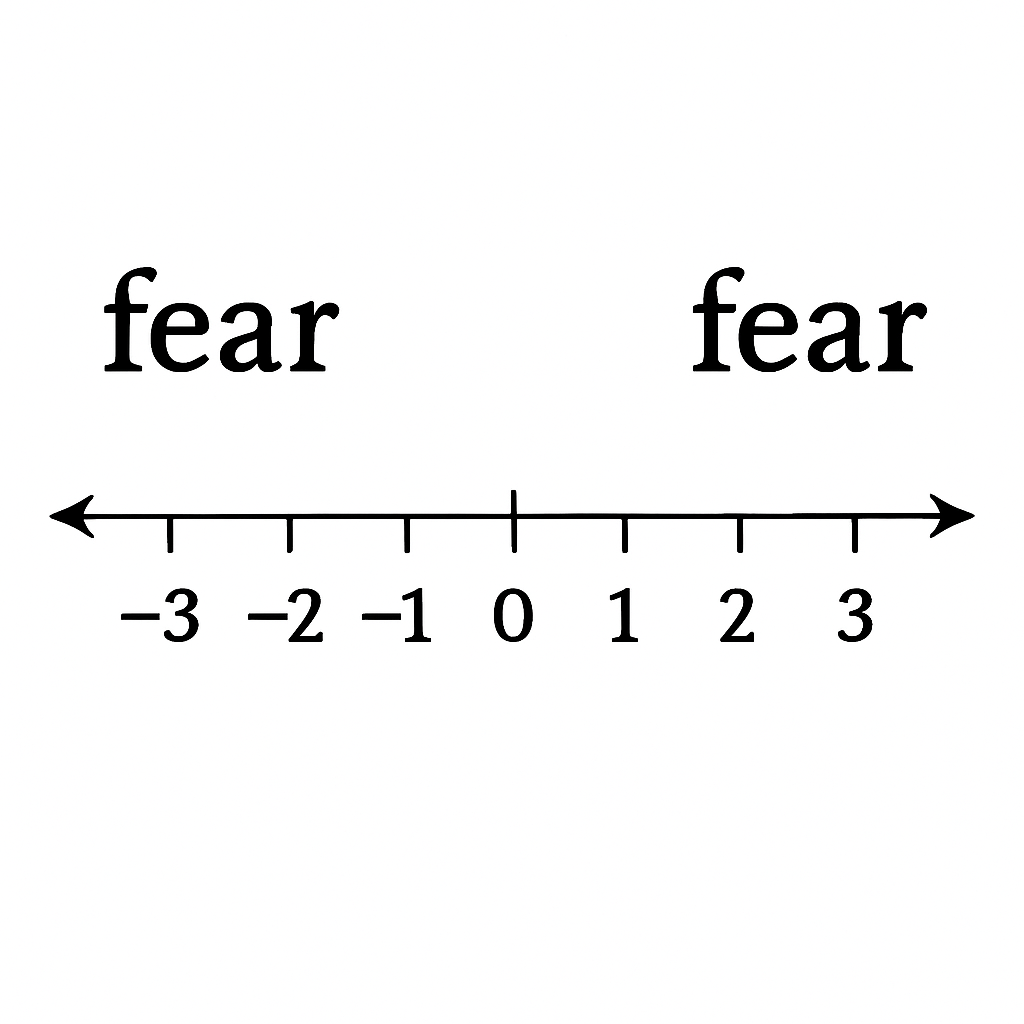
Similarly, he addressed eagerness. “It’s positive,” he said, “when a fresh graduate dives into their first job with enthusiasm, eager to contribute to their team.” But eagerness becomes negative when it leads to impulsive decisions, like investing in stocks without proper research, resulting in loss.He paused, letting the idea settle.
“This line I’ve drawn may be imaginary,” he said, “but the feelings it represents are real, each carrying both positive and negative dimensions.”
To illustrate further, the speaker offered a vivid analogy involving gulab jamun, the beloved Indian sweet.

“Imagine you’ve been craving gulab jamun for days,” he began. “When you finally get the chance, you devour ten in one go, savoring every bite. But then, your mother offers four more. Out of respect, you eat those too. Later, when your father presents another two, you manage to eat them, though you’re now full.
If a relative arrives with yet another serving, what happens if you keep eating? You know the answer—discomfort, or worse. So, you stop. You can’t consume any more.”
He paused, then connected the analogy to his point: “Our thoughts work the same way. You must draw a line, a boundary where you pause and discern which thoughts are positive and which are negative. This line is crucial to prevent overthinking from derailing your life.”
His words sparked a surge of curiosity in me, prompting questions that carried the session forward. My inquiries not only sustained the discussion for the remainder of the hour but also captured the attention of fellow attendees, igniting a lively exchange.
Q&A DIALOGUE:

Speaker: Negative thoughts, overthinking, anxiety, and stress can ruin lives. By distinguishing between positive and negative thoughts and drawing a mental line between them, we cultivate a healthier mindset.
Me: But how do people discern whether their thoughts are positive or negative? Most don’t even recognize when they’re overthinking. To draw that line, there must be some moment of realization. How does that realization begin, and how long does it take?
Speaker: Realization often stems from experiences, whether triggered by external stimuli or internal reflection. Most commonly, it’s external events that spark awareness. Take Buddha, for instance: his encounters with an elderly man, a sick person, a corpse, and an ascetic prompted profound insight. Similarly, in the Mahabharata, when Arjuna hesitates to fight his kin, Krishna urges him to embrace his dharma—his duty—leading to the events of the Kurukshetra war.
Me: (Noticing he hadn’t addressed the time it takes for realization, I pressed further.) Sir, consider a man wrongfully imprisoned for fifty years, released at seventy with proof of his innocence. Won’t negative thoughts of regret haunt him? Should he simply accept his remaining years as ill-fated karma? Where does he draw the line at that age, and what purpose would it serve?
Speaker: Not every scenario applies universally; that’s an extreme case. Can everyone endure such an ordeal? No. Nor does everyone resort to filing public interest litigations. Such cases are exceptions, not the norm.
Me: (Mid-session, the speaker distributed handouts detailing the lives of remarkable figures—Stephen Hawking, Gandhi, Mother Teresa, Thomas Edison—who triumphed over adversity. He asked us to reflect on their stories.) Sir, it seems we often learn from extreme cases, like Hawking, Helen Keller, or Gandhi, don’t we?
Speaker: Indeed. Even Gandhi conducted experiments in his youth, some of which he later regretted, as he wrote in My Experiments with Truth.
Me: Perhaps, sir, but we don’t typically learn from mundane examples, like eating gulab jamun, but rather from others’ extraordinary experiences. It suggests we don’t always realize first from others’ lives or internal prompts. Instead, we draw a line in our own lives, then reflect, adjust, and redraw it.
Speaker: Exactly. Think of a young tree sapling, initially protected by a fence. Once it grows tall, that boundary is removed.
Me: So, the line isn’t fixed—it shifts over time?
Speaker: Yes. Start by setting your boundary at, say, negative five, the furthest extent of your negative thoughts. As time progresses, gradually move that line toward the positive.
MY PERSONAL REFLECTIONS

The speaker’s patience and generosity left a lasting impression. He thoughtfully addressed my questions, guiding me to weave my observations into a coherent and satisfying conclusion. As I reflected, I began to question the very existence of the “line” he described.
In real life, when negative thoughts weigh us down, drawing a mental boundary feels impractical for most. The more we try to suppress these thoughts, the more they seem to haunt us.
So, what’s the solution?
I considered the lives of successful and fulfilled individuals. They, too, grapple with troubling thoughts like the rest of us—what sets them apart?
Did Thomas Edison impose a line on his thoughts while inventing the light bulb? Likely not.
Instead, he erased such boundaries daily, allowing his ideas to flow freely until he achieved his breakthrough.
Similarly, did Stephen Hawking or Gandhi constrain their thoughts to live the lives they envisioned? I doubt Hawking was immune to despair over his condition—yet his response differed from the ordinary.
What distinguished them?
After some introspection, I realized it was their ability to push beyond their limitations and discover a profound sense of purpose. Purpose is a powerful force, often overlooked. Once found, it overshadows all else, bringing happiness and dispelling negative thoughts.
For example a teacher may have his personal problems yet he continued to inspire the Students because he Understood his/her Purpose of getting through it.Those who lead joyful, settled lives are the ones who uncover this joy through their actions. They relentlessly stretch their boundaries, not by fixating on mental lines, but by pursuing their purpose with unwavering commitment. This purpose emerges through persistent questioning and the daily courage to transcend one’s limits.
Examples of Purpose Overriding Mental Lines
*A Student Overcoming Academic Anxiety
Scenario: A student preparing for competitive exams struggles with anxiety and overthinking, fearing they’ll never measure up. They might try to draw a line to suppress thoughts of failure, but this could intensify their stress.
Purpose Overrides the Line: The student discovers a purpose in using their education to uplift their community, perhaps by becoming a teacher or social worker. This vision shifts their focus from fear to action—studying with intention, seeking support, and viewing setbacks as growth opportunities. Like the reflection on purpose dispelling negative thoughts, their goal reorients their mindset, reducing the need for rigid mental limits.
*A Cancer Patient Finding Meaning in Adversity:
:Scenario: A person diagnosed with cancer grapples with despair and negative thoughts about their prognosis, similar to how Hawking might have faced his condition. They could attempt to draw a line to block out fear, but suppressing such thoughts may amplify their distress.
Purpose Overrides the Line: Inspired by a purpose to raise awareness about cancer or support others with the disease, they start a blog or advocacy group. This mission transforms their negative thoughts into fuel for action, helping them find joy in connecting with others. As the story suggests, purpose brings happiness, allowing them to push beyond mental boundaries and live meaningfully despite their illness.
*A Parent Navigating Financial Hardship:
Scenario: A single parent facing financial struggles is overwhelmed by negative thoughts about providing for their children. Drawing a line to limit worry might seem logical, but it risks suppressing valid concerns without resolving them.
Purpose Overrides the Line: Their purpose—to ensure a better future for their children—drives them to take proactive steps, such as learning new skills, seeking community resources, or starting a side business. This focus transforms worry into action, echoing the insight that purpose-driven individuals find joy in their efforts, bypassing the need for rigid mental boundaries.
So,What about you….?
What purpose might be waiting for you to uncover?
How will you question your own boundaries today to take that first step toward a life of meaning…….?
Let me know in the comments……!
Rakesh Kanikaram✍️






Leave a Reply to Sai sanjana Cancel reply